Your 42-Pound Head: Decoding 'Tech Neck' and the Forward-Head Drift
Why your head effectively triples in weight when you focus on code, and the specific muscle 'X' pattern that causes chronic neck and shoulder tension.
Heavy is the Head: Why Your Desk Habits Make Your Neck Scream
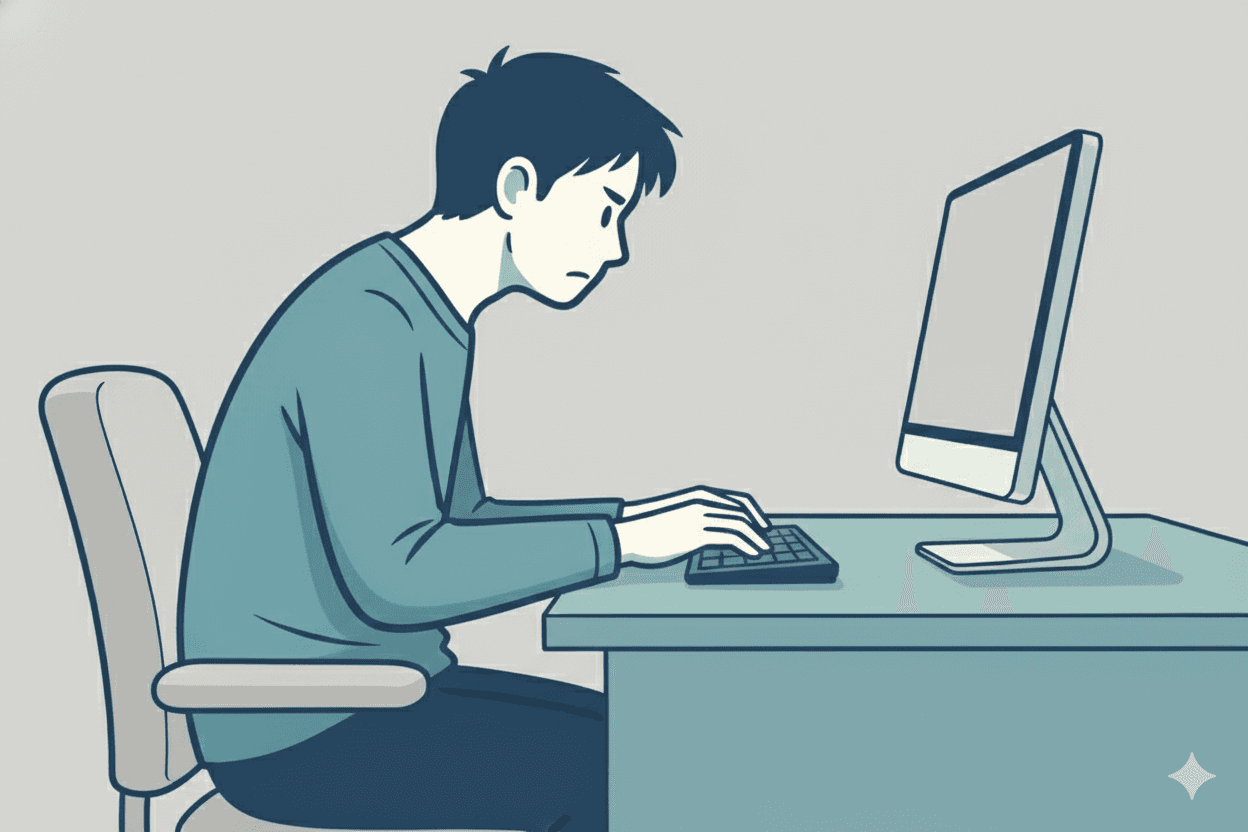
When I first started looking into the hidden posture problem for desk workers, I was obsessed with that one specific burning knot under my shoulder blade. I thought it was just a local muscle issue. But as I dove deeper into the mechanics, I realized that knot was actually the final symptom of a much larger battle against gravity—a battle I was losing every single time I entered "the zone."
If you are a developer, designer, or anyone who does deep work, you’ve experienced The Drift. It starts when you sit down with a straight back and good intentions. But as the logic gets complex and the problem-solving intensifies, your nose gets closer and closer to the screen.
Your head wasn't designed to be held out like a fishing lure. Here is the physics of what is actually happening when you drift.
The Physics of "The Drift"
A human head weighs about 10 to 12 pounds in a neutral position. When your ears are aligned directly over your shoulders, your spine supports that weight effortlessly, distributing the load through your vertebrae as nature intended.
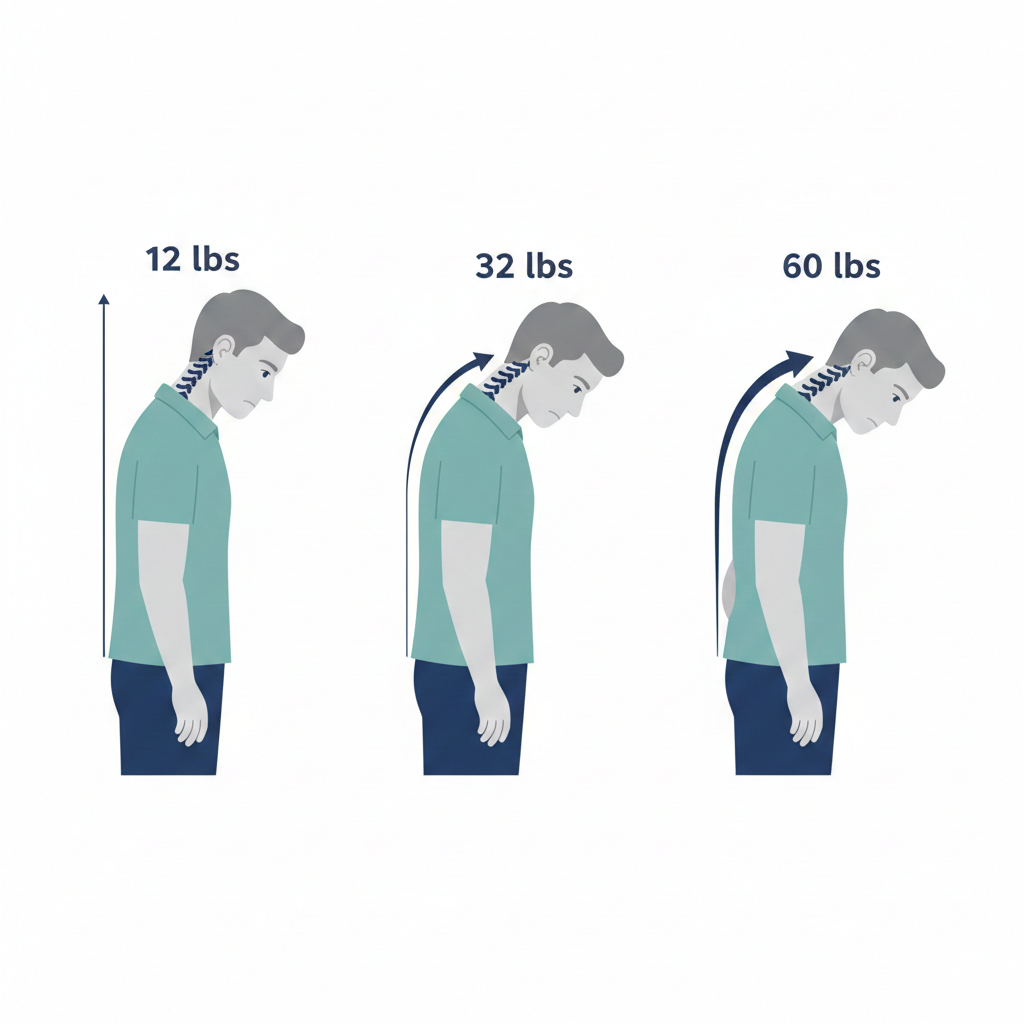
However, for every inch your head moves forward from that center line, the effective weight on your neck increases by roughly 10 pounds. According to a landmark study published by Dr. Kenneth Hansraj in Surgical Technology International, the stress on your cervical spine multiplies exponentially as your head tilts:
- 0 Degrees (Neutral): 10–12 lbs
- 15 Degrees: 27 lbs
- 30 Degrees: 40 lbs
- 45 Degrees: 49 lbs
- 60 Degrees: 60 lbs
By the time you are deep into a bug fix, leaning in at a 30-degree angle, your neck is effectively trying to hold up a 40-pound dumbbell. If you did bicep curls with 40 pounds for eight hours straight, you’d expect a tear. Yet, we ask our small neck muscles to do exactly that every single workday.
The "Upper Crossed" Trap: Why Your Shoulders Feel Like Concrete
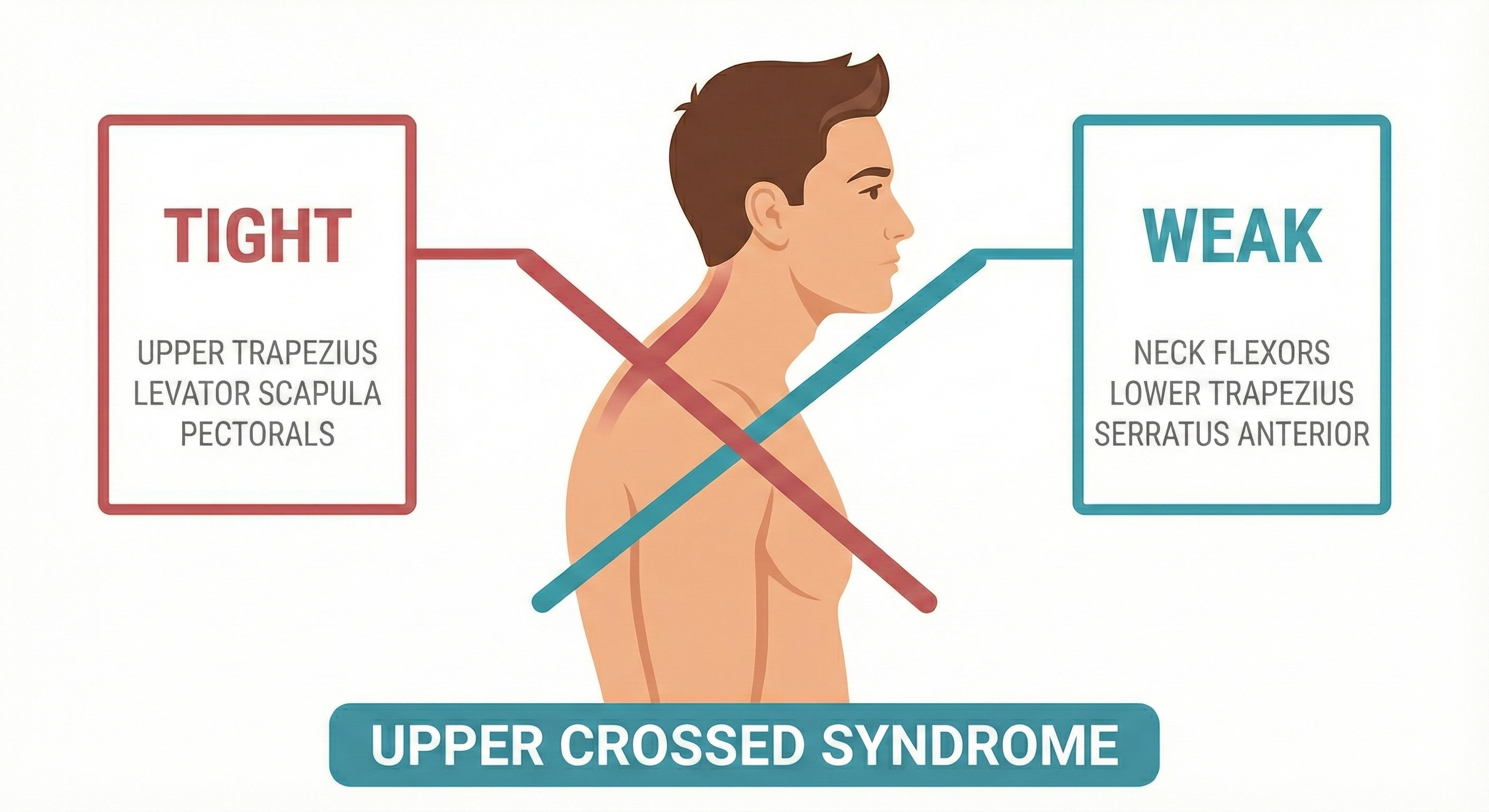
When your head drifts forward, your body enters a state of structural imbalance known as Upper Crossed Syndrome (UCS), a term coined by the legendary posture researcher Vladimir Janda. It isn't just one muscle getting tight; it's a predictable "X" pattern of overactive and underactive muscles that locks you into a hunched position.
1. The Overactive (The "Burners")
The muscles in the back of your neck and top of your shoulders—specifically the Upper Trapezius and Levator Scapulae—become hyper-responsive. They are quite literally in a "losing battle" to pull your 40-pound head back onto your shoulders. This is exactly where those deep, burning knots come from. At the same time, your chest muscles (pectorals) tighten and shorten, pulling your shoulders forward even further.
2. The Underactive (The "Sleepers")
Because the upper traps are doing all the work, the muscles that are supposed to stabilize your posture—the Deep Neck Flexors and the Lower Trapezius—effectively "turn off." They become weak and inhibited, which is why "just sitting up straight" feels so exhausting after ten minutes; your supporting "posture engine" has stalled out.
The Hidden Danger: "Ligament Creep"
The most dangerous part of The Drift isn't just muscle soreness—it's what happens to your structural "glue." When you maintain a forward-leaning posture for hours, your body experiences "Ligament Creep."
As detailed in recent research on cervical instability, this is the slow, physical stretching of the ligaments in your neck due to static loading. Unlike muscles, ligaments don't "snap back" easily. Over time, this "creep" can lead to cervical instability and a loss of the natural curve in your neck, which has been linked to everything from headaches to decreased mental clarity during the workday.
Breaking the Cycle with Micro-Resets
You cannot rely on your memory to stay upright. Research shows that up to 92% of IT workers exhibit symptoms of Forward Head Posture, largely because our brains are wired to prioritize the task on the screen over the position of our spine.
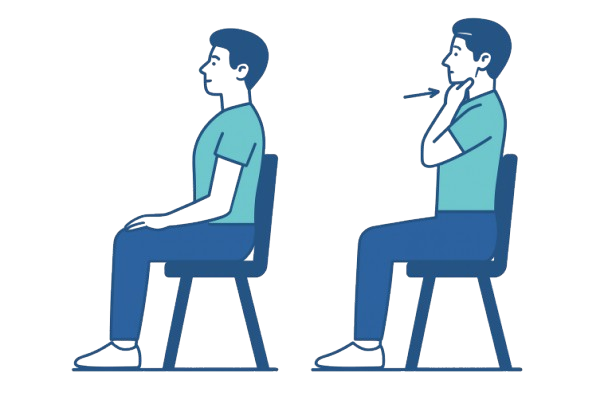
This is exactly why I built the Posture Pomodoro app. It doesn't ask you to be a statue; it asks you for 30 seconds of awareness.
- The Chin Tuck: Re-activates the deep neck flexors.
- The Scapular Reset: Releases emergency tension in the upper traps.
- The Visual Break: Prevents downward gaze by restoring eye-level viewing.
The goal isn't perfect posture—it's preventing your head from becoming a 60-pound anchor that drags your health and productivity down. Stop the drift. Do a reset. Save your spine.
Want to know your actual CVA score? The free posture analysis measures your head forwardness and 7 other metrics from two standing photos — it takes about 60 seconds.