
The Hidden Posture Problem for Desk Workers
Why long hours at a desk can quietly wreck your posture — and how small movements plus a posture app can help prevent chronic back and neck pain.
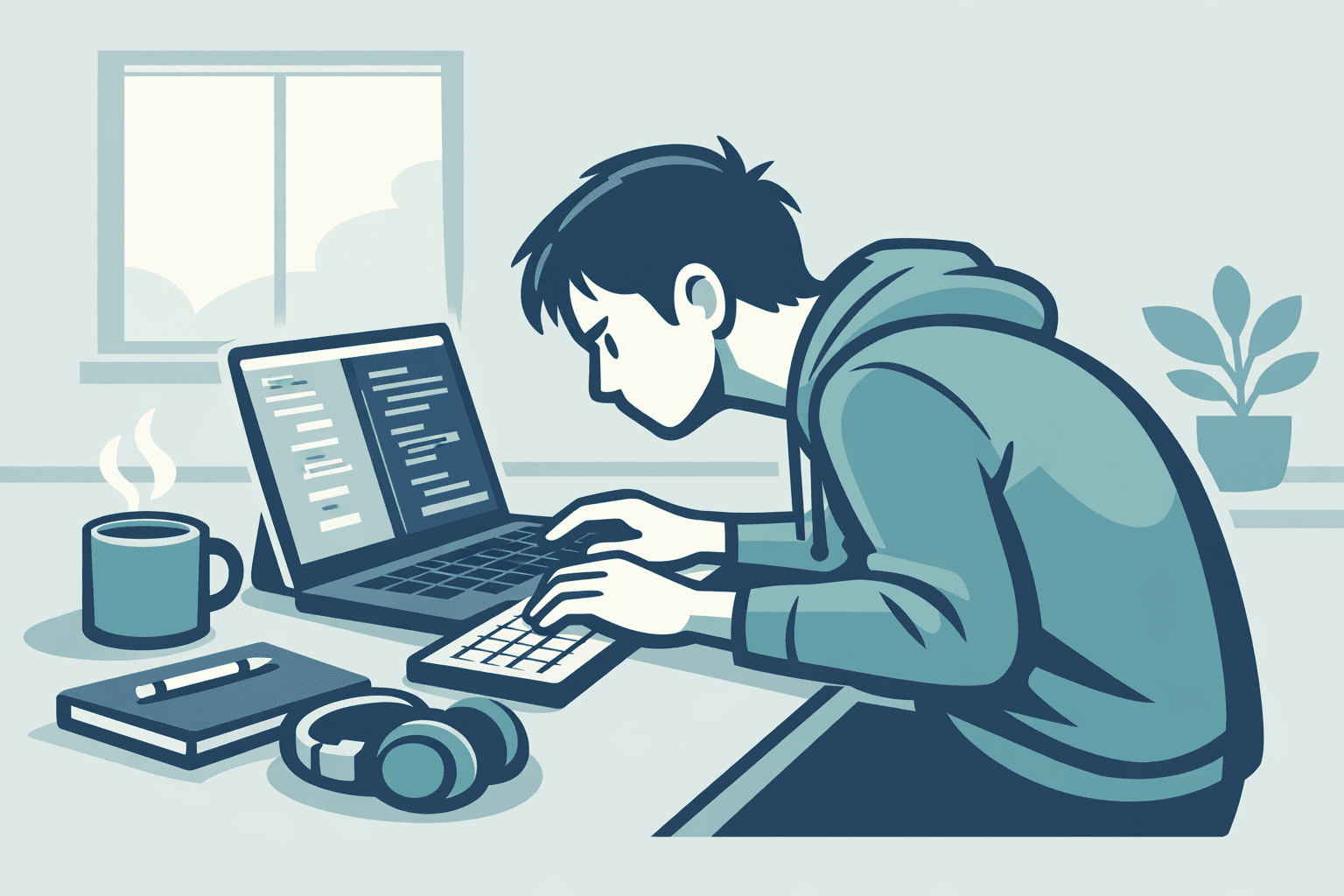
The Posture Problem No One Warns You About: How Desk Work Quietly Messes With Your Body
I code a lot — often 8 to 12 hours a day at my desk. For years I dealt with a tight knot under my left shoulder blade, persistent neck tension, and mid-back pain that never went away. I tried physical therapy, chiropractic visits, acupuncture, massage, all kinds of body work. Sometimes I got relief. But the pain always came back.
Why did it keep coming back? Because every day I was sitting hunched over a screen for hours and erasing whatever relief I had gained. My posture-support muscles were weak. The muscles that actually worked were upper traps, chest, hip flexors — they over-compensated. Over time they locked me into a posture my body started treating as normal. By midday I could rarely sit upright longer than ten minutes before the ache returned.
If that story sounds familiar to you, you are not alone.
Why Long Hours at a Desk Can Slowly Change Your Body
When you sit at a computer for many hours, your body adapts — often in ways that do not feel good.
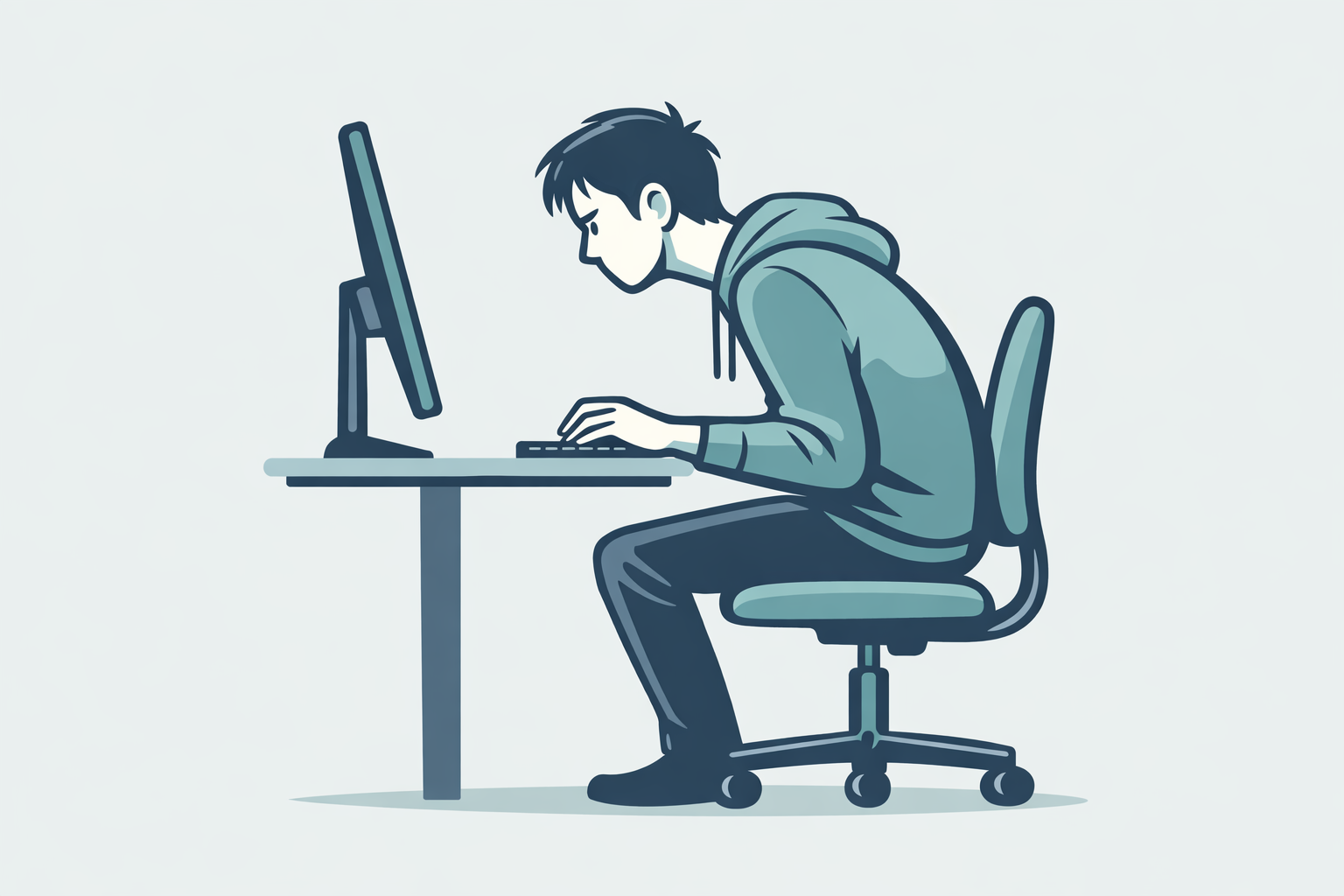
Here is what tends to shift over time:
- Tight hip flexors pulling your pelvis forward
- Compressed chest, rounded shoulders, weakened upper-back muscles
- Your head drifting forward toward the screen
- Spine losing its natural alignment while support muscles remain underused
These changes do not usually happen all at once. They accumulate slowly. What feels like a normal work posture may actually be the result of many months or years of subtle adaptation.
Research supports this. One study of office workers found that over the past year 53.5% reported neck pain, 53.2% reported lower-back pain, and 51.6% reported shoulder pain. Daneshmandi et al. 2017
Another review of neck pain among office workers found one-year prevalence rates ranging between 42% and 63% depending on the sample and methods used. Guduru et al. 2022
If you spend most of your workday seated, this is not just bad luck. This is what happens when posture support is ignored.
Why “Just Sit Up Straight” Advice Often Fails — And What Really Works
You have probably heard advice like “sit tall” or “pull your shoulders back.” Maybe you tried it. Maybe for a day or two you felt better. Then your body slipped back into old patterns.
Here is why that kind of advice fails in the long run:
- It demands constant willpower to maintain a posture all day. Muscles get tired. You drift back.
- It treats posture as a static position instead of a dynamic system. Posture depends on movement, muscle balance, and regular resets.
- Holding what some call “perfect posture” for hours is unrealistic under heavy work conditions.
My experience proved that. No amount of good posture for 10 minutes helped when I spent hours slumped over. Instead what worked was regular movement, short posture resets, and gradually strengthening core and stabilizer muscles so my body could support itself — even during deep work.
Why Short Breaks and Simple Movement Beats Trying to Sit Perfectly
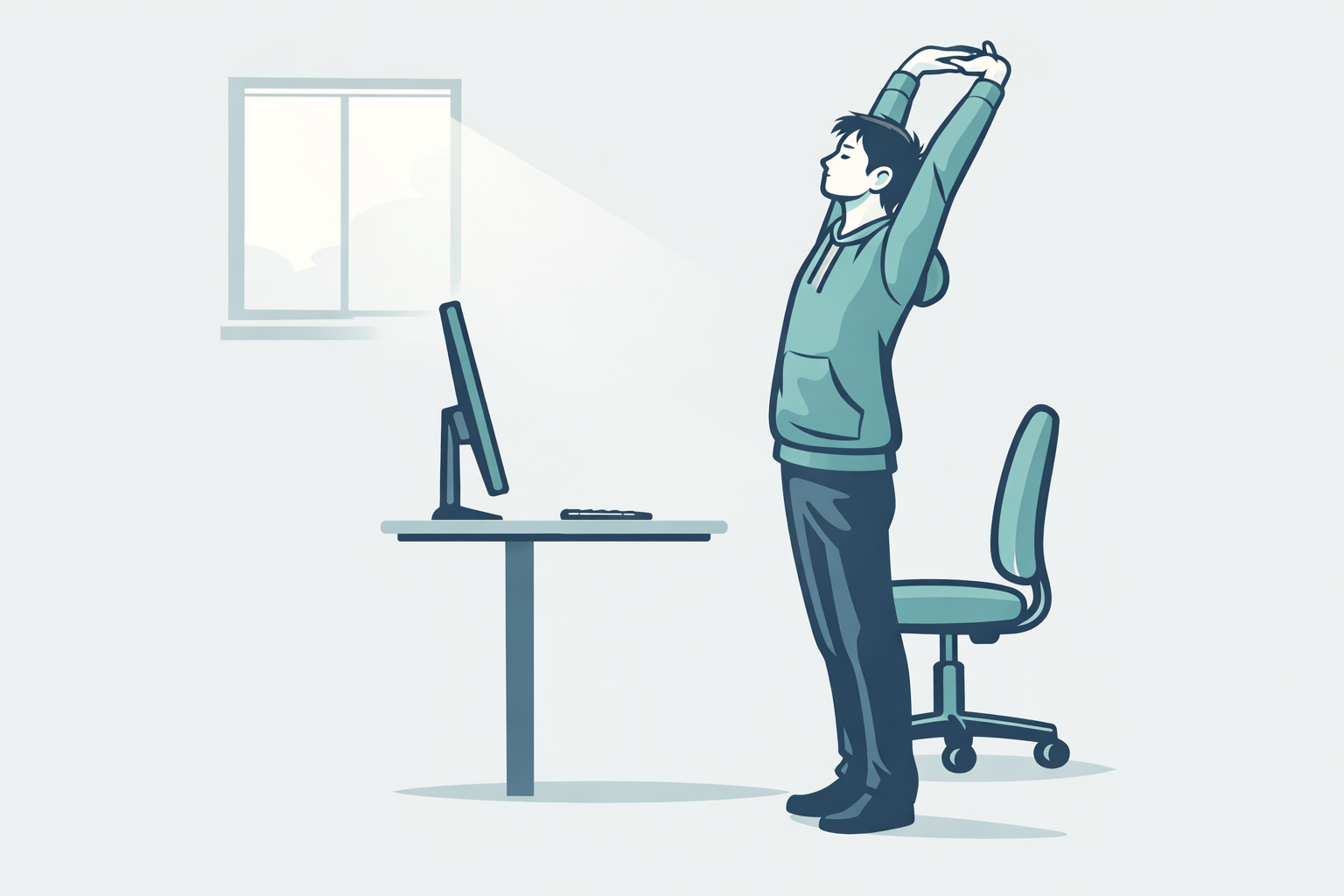
Over time I discovered something important. The days I felt best were not the ones I tried to sit perfectly. The days I felt best were the ones I paused, stretched, moved, reset. On those days, the pain eased up, I felt more alert, less stiff, and lighter overall.
Here is what short movement or mobility breaks do for you:
- They send fresh blood flow to muscles that have been compressed or inactive.
- They break up tension patterns that build during long sessions of static sitting.
- They help reset posture so tight, overworked muscles do not hold you in bad positions all day.
- Over time they wake up underused support muscles: core, spine stabilizers. Meanwhile, the overworked compensating muscles loosen.
Even a 30 to 60-second stretch or mobility reset can make a difference. Do that a few times a day, consistently. Over weeks and months, you start retraining how your body sits and moves.
Why a Posture App Makes Sense — And Why I Built One
I tried therapy, ergonomic chairs, new desks. None of it stuck. The pain kept coming back because I was unable to maintain posture while deep into coding sessions. I needed reminders. I needed structure. I needed a tool that worked with my schedule. I needed something to help me build posture habits over time.
That is why I built the Posture Pomodoro app.
Here is what it does differently:
- It sends regular reminders so you do not rely on memory or discipline.
- It delivers short micro-exercises and posture resets that target the tension areas desk work aggravates.
- It helps you build posture-supporting habits over time instead of forcing a rigid posture all day.
- It fits easily into a developer’s schedule: work, focus, code — but also move, reset, protect your body.
Because what I learned the hard way is that sitting poorly all day can slowly lock your body into pain, often without you even noticing — until it is too late. If you want to see exactly where your posture stands right now, you can try a free posture analysis that measures 8 specific metrics from just two photos.
Small Consistent Wins Today Can Prevent Bigger Problems Tomorrow
You do not need a perfect chair, an expensive ergonomic setup, or a dramatic schedule overhaul to start feeling better. You only need small, consistent movement, awareness, and short posture resets peppered through your workday.
If you work at a desk and want to feel lighter, stronger, less drained by the end of the day: start small. Stand. Stretch. Move. Reset. Breathe. Then do it again.
Make posture care part of your workflow. Over time, these small wins add up. They can save you years of chronic tightness, recurring pain, stiffness, and countless hours wasted dealing with discomfort.